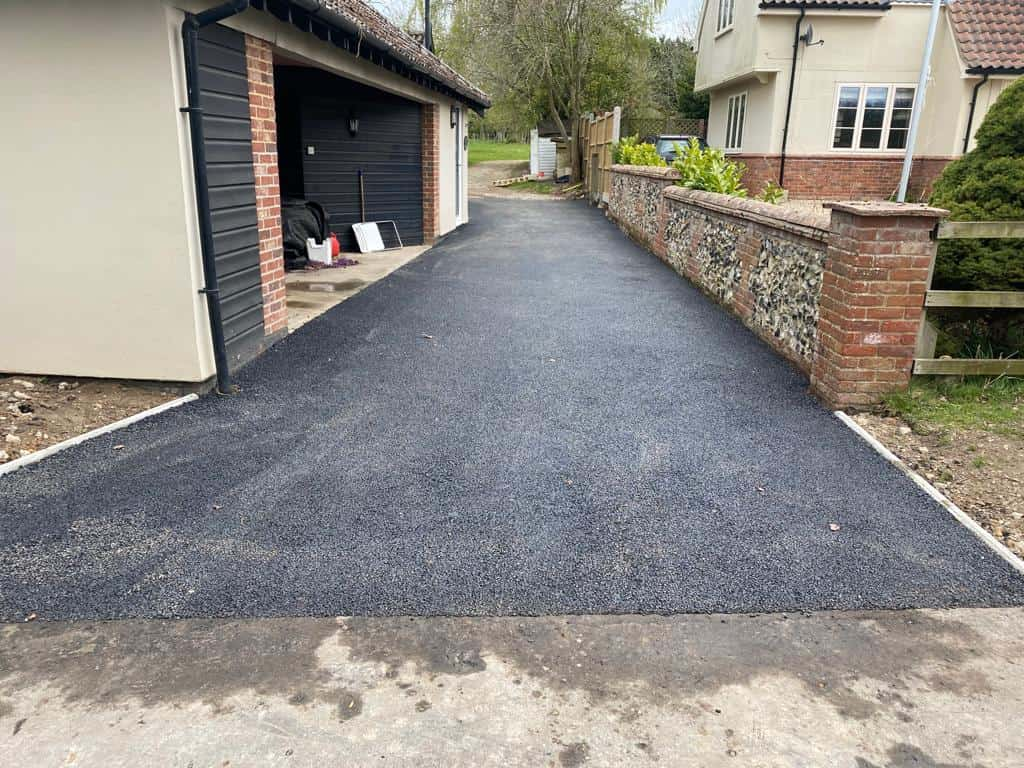
Want a Cleaner-Looking Front Garden? A New Tarmac Drive Could Help
How Tarmac Can Create a Neater and More Practical Entrance
The front of a property often combines several practical features, including parking, pathways, planting and access to the entrance. When surfaces become cracked, uneven or visually disconnected, the entire space can begin to look untidy even when the surrounding garden is well maintained.
A professionally installed tarmac driveway can give a front garden a smoother and more organised appearance. For homeowners in Gravesend, Kent, it can also improve everyday access, define parking areas and make routine maintenance more straightforward.
Replace a Patchy or Deteriorated Surface
Older driveways often contain a mixture of repairs, worn sections and materials installed at different times. Cracks, potholes, weeds and uneven patches can make the entrance appear neglected while also affecting how comfortably it can be used.
A new tarmac surface creates a more consistent finish. However, the existing driveway should first be assessed to establish whether resurfacing is suitable or whether the underlying construction requires more extensive attention.
Create a Smooth, Unified Appearance
Tarmac forms a continuous surface without the numerous joints found in some other driveway materials. This can make the frontage feel less cluttered, particularly where the available space is modest or irregularly shaped.
A clean tarmac finish can also provide a simple backdrop for other features, such as:
- Planted borders
- Entrance paths
- Decorative stone
- Retaining edges
- Gates
- Steps
- Defined lawn areas
The result can be visually restrained while still complementing the character of the property.
Define Parking and Garden Areas
A well-designed driveway should make it clear where vehicles are intended to park without allowing the hard surface to overwhelm the front garden.
Professional planning can use edging, planting and changes in layout to separate parking from pedestrian and garden areas. This helps create a more balanced frontage and prevents soil, gravel or vegetation from gradually spreading onto the drive.
Improve Everyday Access
Cracked, loose or badly uneven surfaces can make walking, parking and moving bins more awkward. Depressions may collect water, while broken edges can create sudden changes in level.
A correctly laid tarmac driveway can provide:
- A more even route to the property
- Clearer access between the pavement and entrance
- Smoother vehicle movement
- Fewer loose surface materials
- Better-defined edges
- More practical access in wet conditions
The driveway’s gradient and connection with paths, gates and entrances should be considered during the design stage.
Make Routine Cleaning More Manageable
A continuous tarmac surface is generally straightforward to sweep and keep clear of leaves, mud and other debris. There are fewer joints in which loose material can gather, although occasional cleaning and maintenance will still be required.
Good edging also helps prevent adjacent soil and planting from spreading onto the driveway. Keeping drainage points clear and treating small defects promptly can help preserve the neat appearance of the finished surface.
Improve Surface Drainage
Standing water can make a driveway look poorly maintained and may contribute to surface deterioration. Puddles often develop because of settlement, ineffective gradients or blocked drainage routes.
A new installation provides an opportunity to review how water moves across the frontage. Suitable falls and drainage components can then be incorporated so that rainfall is directed away efficiently rather than collecting in low areas.
Drainage must be planned alongside the surface, as it cannot be corrected reliably by appearance alone.
Adapt the Driveway to the Available Space
Tarmac can be installed across straight, curved and irregular layouts. This flexibility makes it useful where the driveway needs to fit around planting areas, walls, paths or other established features.
Accurate setting out is still important. The width, turning space and position of boundaries should reflect how the driveway will be used. A carefully planned shape can make the frontage appear larger and more orderly without creating unnecessary hard surfacing.
Use Edging to Strengthen the Design
Edging contributes to both appearance and performance. It creates a clear boundary between the tarmac and surrounding features while supporting the edge of the surface.
Possible approaches include simple kerbs, contrasting blocks or other suitable restraints. The choice should complement the property rather than compete with it. Consistent edging can also connect the driveway visually with paths, steps or entrance areas.
Why the Foundation Matters
A clean finish will only remain attractive if the ground beneath it is stable. The subgrade and sub-base must support regular vehicle use without excessive settlement or movement.
Poor preparation can lead to:
- Cracking
- Sunken wheel tracks
- Uneven levels
- Broken edges
- Repeated potholes
- Water collecting in depressions
Professional installation should include suitable excavation, a properly compacted sub-base and careful assessment of weak ground. Correct preparation is essential for both appearance and long-term performance.
Resurfacing or Full Reconstruction?
Not every worn driveway needs to be removed completely. Resurfacing may be appropriate when the existing foundation remains stable and deterioration is confined mainly to the upper layer.
Full reconstruction may be more suitable where the driveway has widespread movement, deep depressions, recurring cracks or an inadequate base. Assessing the structure before work begins prevents a new surface from being placed over unresolved weaknesses.
Planning the Frontage as a Complete Space
The best results come from considering the driveway as part of the wider front garden. The position of paths, planting, entrances and drainage should influence the design rather than being treated as separate details.
A coordinated plan can improve:
- Movement between parking and the front door
- Access through gates
- Separation between vehicles and planted areas
- The visibility of steps and level changes
- The overall balance of hard and soft landscaping
This creates a frontage that looks intentional and remains practical in daily use.
Conclusion
A new tarmac driveway can give a front garden a cleaner appearance by replacing patchy surfaces, defining parking areas and creating a smooth visual connection with the property. Appropriate drainage, secure edging and thorough ground preparation are essential if the finished surface is to remain neat and dependable.
If you are considering a new tarmac drive at your property in Gravesend, Kent, Gravesend Driveways can assess the existing surface and help plan a suitable installation. A professionally prepared driveway can improve both the appearance of the frontage and the way it functions every day.
Call us on: 01474 551 689
Click here to find out more about Gravesend Driveways
Click here to complete our contact form and see how we can help with your driveway needs.